450 Years of
The English Spa
Lamont House sits at the quiet heart of Low Harrogate — the most fashionable quarter of England's original spa town. The story of this neighbourhood stretches back to 1571, when a single spring changed everything.
The Origin of
The English Spa
Harrogate didn't just happen — it was discovered. Before the grand hotels and promenading visitors, there was a single spring: the Tewit Well, found in 1571 by William Slingsby on the open moorland of The Stray. He noticed the water mirrored the famous mineral springs of Spa, Belgium — and the name stuck. England had its spa.
For the next two centuries, the town grew slowly around its wells. By the 1700s, Harrogate was drawing physicians, aristocrats, and the fashionably unwell from across the country — each seeking the restorative powers of the mineral waters that bubbled up from the limestone beneath the moors.
"For 450 years, travellers have sought sanctuary here."
Our neighbourhood, Low Harrogate, became the fashionable heart of the town when the powerful Sulphur Wells were found right on our doorstep — leading, eventually, to the creation of the Royal Pump Room, just a three-minute stroll from our front door.
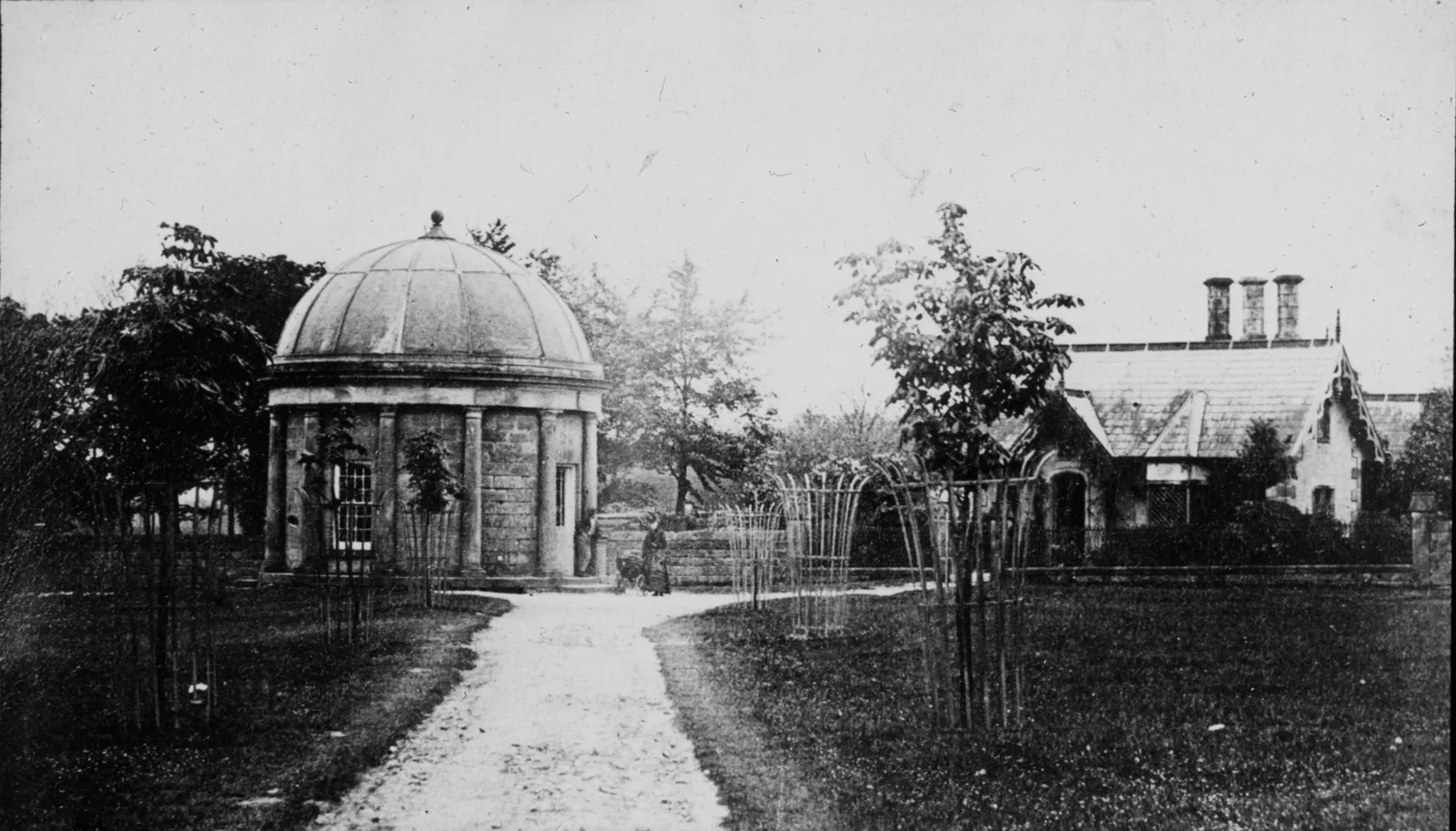
The original Tewit Well, Low Harrogate — c.1860s
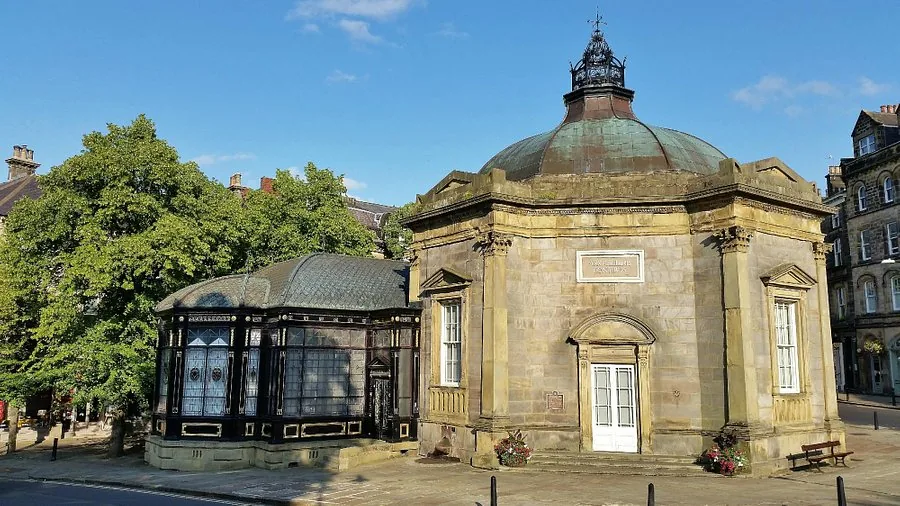
The Royal Pump Room — built 1842, three minutes from Lamont House
Low Harrogate &
The "Stinking Spaw"
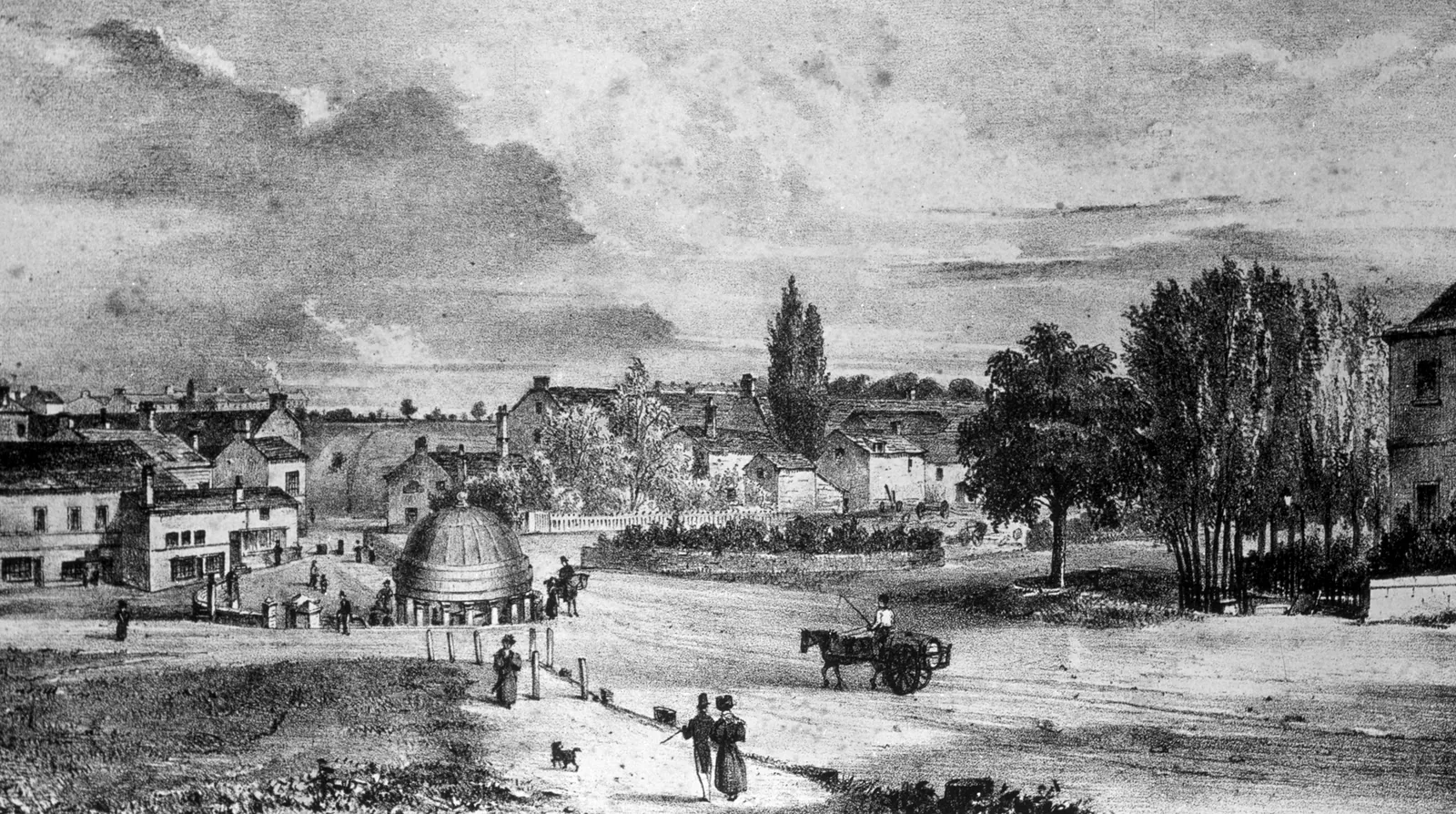
View of the Old Sulphur Well, Low Harrogate — Victorian engraving, North Yorkshire County Record Office
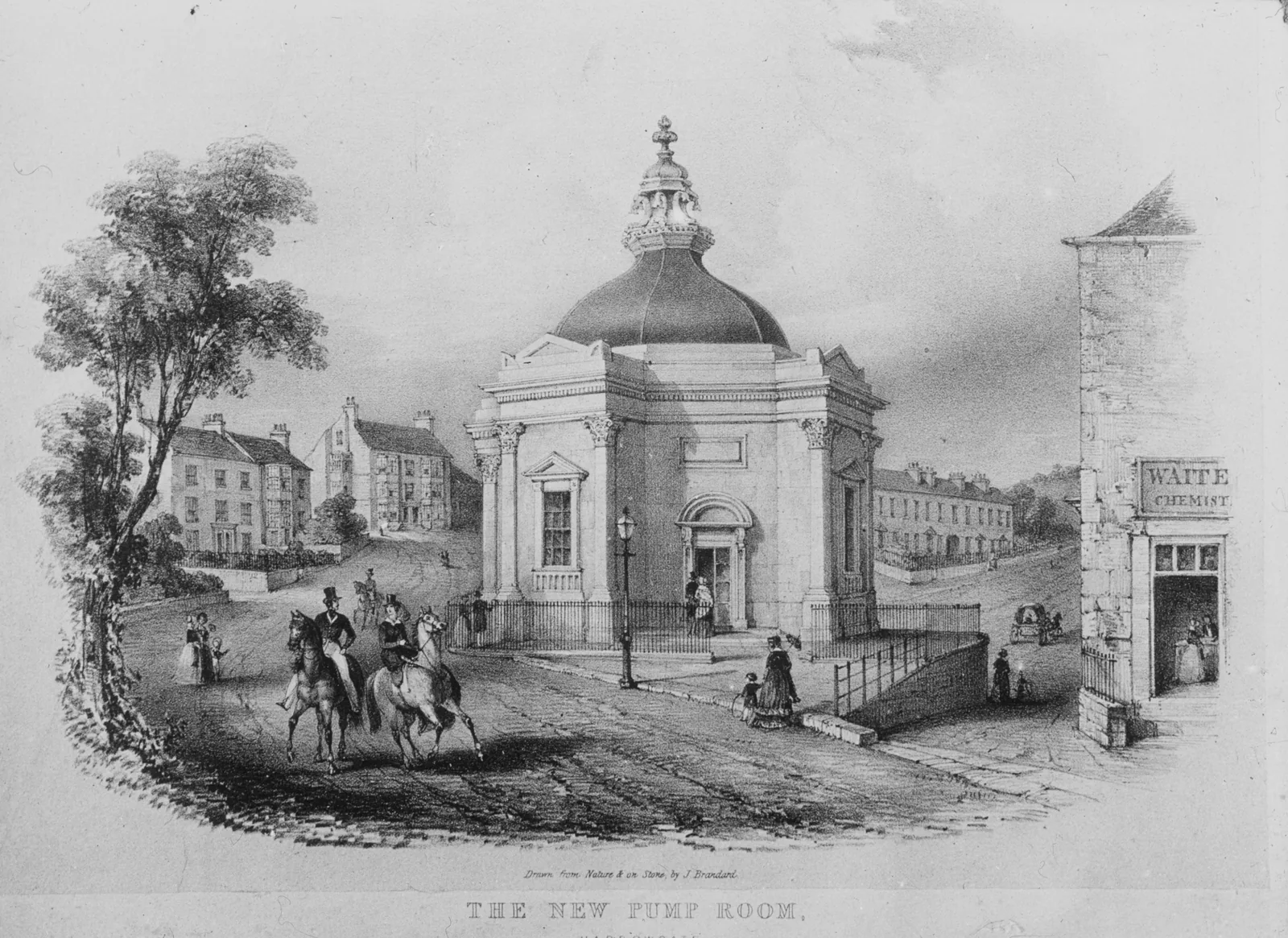
The New Pump Room — lithograph by J. Brandard, c.1840. North Yorkshire County Record Office
High Harrogate was for the views. Low Harrogate was for the cure. The Old Sulphur Well — affectionately, if irreverently, nicknamed the "Stinking Spaw" by Victorian visitors on account of its powerful sulphurous smell — was the most famous mineral spring in Europe.
By the mid-1800s, this corner of Harrogate was the playground of the elite. Guests would take the waters at seven in the morning before joining the fashionable Promenaders — the daily procession of visitors who strolled the gardens, compared ailments, and were seen to be seen.
"Lamont House sits in the quiet, leafy heart of Low Harrogate — traditionally the most prestigious quarter for those seeking the restorative powers of the Valley Gardens and the Turkish Baths."
The Valley Gardens — a five-minute walk from our front door — were laid out in this era as the formal promenade ground for the spa visitors. The Turkish Baths, a magnificent Moorish Revival building on Parliament Street, opened in 1897 and remain in daily use to this day: one of only a handful of surviving Victorian Turkish baths in England.
The Ghost of
St Mary's Walk
Guests often ask whether there is a church on St Mary's Walk. The answer is: yes — and no.
The original St Mary's Church was built in 1824 at the head of what is now our street — and St Mary's Walk was literally its grand approach, the formal tree-lined path along which the congregation would process. The church became a centrepiece of the neighbourhood, its tower visible from across Low Harrogate.
"When Lamont House was built in the late 1890s, our first residents would have walked this very path to the original stone church that gave our street its name."
By 1903, however, the church was declared structurally unsafe and demolished. In a pleasing act of Victorian recycling, its stones were reused to build the chapel at Harrogate Ladies' College — where they still stand today.
A new St Mary's Church — the current Grade II* listed Gothic building on Westcliffe Grove — replaced it in 1916. Today it stands empty and in disrepair, a quietly melancholy presence on the street. Though the building has fallen silent, the peaceful, almost ecclesiastical quality of the Walk itself remains entirely intact. It is, we think, one of the most serene streets in Harrogate.
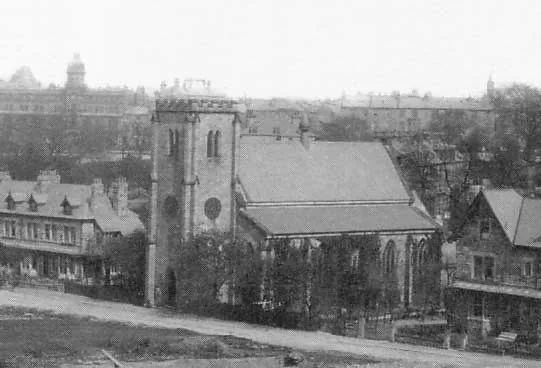
The original St Mary's Church, Harrogate — 1890s photograph. Public domain via Wikimedia Commons.
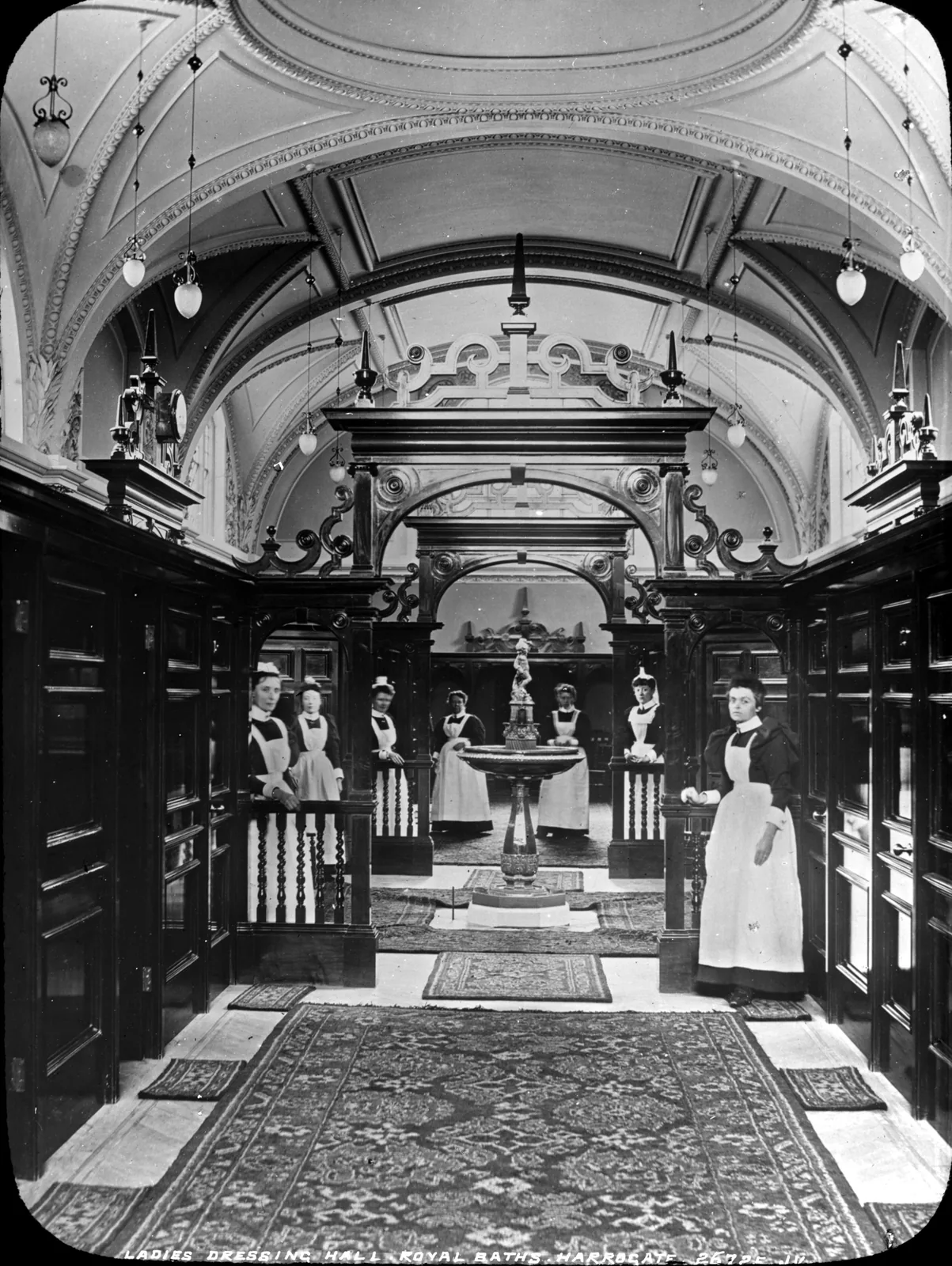
Ladies Dressing Hall, Royal Baths, Harrogate — Victorian photograph. North Yorkshire County Record Office.
The Tradition
Continues
The Royal Baths — the grandest expression of Harrogate's spa ambitions, opened in 1897 — still stand on Parliament Street. The Turkish Baths within them remain in daily use: one of only a handful of Victorian Turkish baths still operating in England, their Moorish tilework and plunge pools unchanged since the day they opened.
Harrogate has never quite lost its character as a place people come to restore themselves. The Valley Gardens still draw morning walkers. Bettys still serves afternoon tea. And at Lamont House, we still believe the best thing you can do for a guest is give them a proper welcome, a comfortable room, and a breakfast worth getting up for.
Check Availability